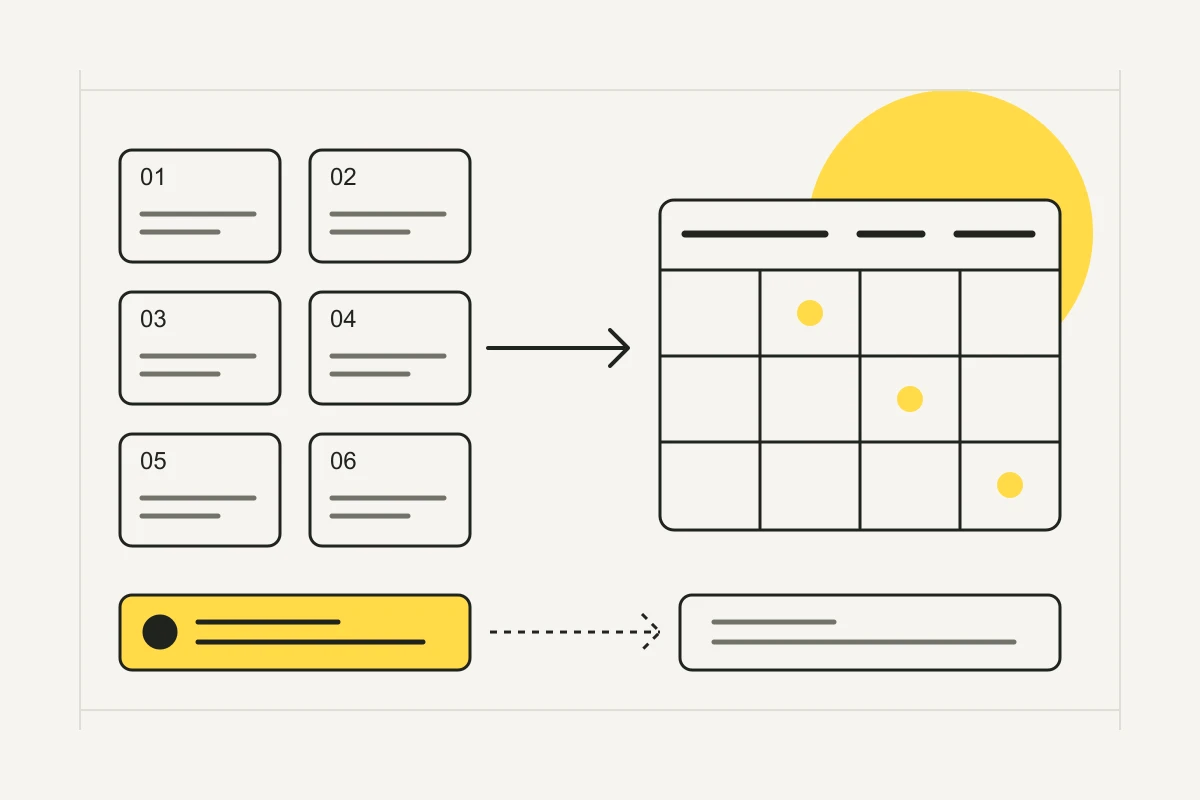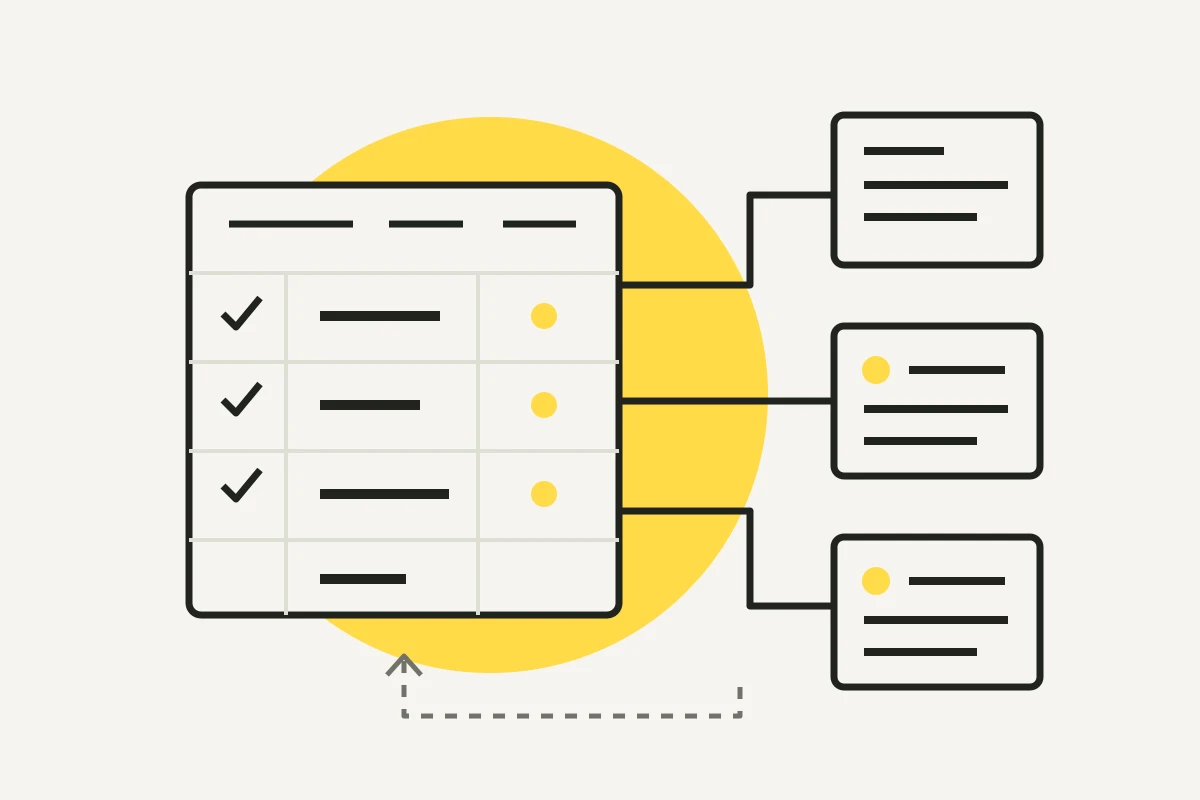
Start with a facts register, not an About page draft
A facts register is a working table of the statements you are prepared to publish about the company. Keep one statement per row so that a changed service area does not silently change a headquarters address. Copy the table below. BeeCited editorial is the checking role used for these entries.
These entries were checked against BeeCited’s local About record, service catalogue and shared editorial author record on 18 November 2026. They establish what our prepared website says. They do not verify legal registration, ownership of an external account, an office location or the accuracy of an AI answer.
| Fact | Checked value | Source and scope | Check owner | Reviewed / next trigger |
|---|---|---|---|---|
| Public name | BeeCited; the website also uses BeeCited Agency | About page and site identity; public-facing name, not a legal-name assertion | BeeCited editorial | 18 Nov 2026 / name change |
| Service scope | GEO, website development, website optimization, technical fixes and analytics setup | Five service records; individual pages define conditions and exclusions | BeeCited editorial | 18 Nov 2026 / offer change |
| Journal author | BeeCited, an organization | About: journal section and shared author record; no invented expert | BeeCited editorial | 18 Nov 2026 / editorial policy change |
| [Your next fact] | [Confirmed value, or pending] | [Evidence and exact public destination; keep private evidence private] | [Named person or assigned role] | [Review date and next trigger] |
Compare this example with About BeeCited and the service pages it describes.
Which facts help a buyer identify the right company?
Record the public name, official website, services, customer types, contact route and actual service area. Keep registered address, customer-facing premises and areas served as separate fields. Working with Polish clients does not establish an office in Poland. Offering a Ukrainian website does not establish a Ukrainian legal entity.
Where relevant and verified, add the legal name, former names, founding history, parent company and product relationships. A trading name, legal entity and product can have different names and dates. Explain the relationship instead of forcing them into one value. If evidence is missing, mark the field pending in the internal register and leave the claim out of the public draft.
For each official profile, store its exact address and who can approve edits. A similar name or a matching logo is insufficient proof that an account is yours. For a namesake, give positive identifiers: your website, category, genuine location and verified profiles. Do not attach an unrelated company’s reviews, history or identifiers to your own record.
For the wider role of content, sources and measurement, read our introduction to GEO.
An About page template built from checked facts
Replace each bracket with a verified value. Remove optional blocks that you cannot support. This is an editorial template, not a description of a fictional client or a list of mandatory legal disclosures.
Opening: “[Public name] provides [specific services] for [customer type]. We serve [actual area or remote-delivery conditions]. Our official website is [verified website].” Follow it with links to the relevant service pages, where readers can check scope and exclusions.
Identity and history, if verified: “[Trading name] is operated by [legal entity]. [Former name] was used during [documented period]. [Product] is a product of [company].” Distinguish the brand’s start from the incorporation date if those are different events.
Evidence: “For [project or claim], see [permitted evidence], covering [period and scope].” Publish only supported people, qualifications and results. A company’s own statement remains a company statement even when repeated in a directory. Leave out unsourced awards, customer logos and claims to be the best.
Contact and upkeep: “For [type of inquiry], use [working contact route]. Company facts last reviewed [date].” Keep the internal check owner in your register; publish personal details only when appropriate and authorized. Check the contact destination without treating a page visit as a delivered inquiry.
Use the service page brief and acceptance table to give each offer the detail that would make the About page too long.
Reconcile the site, profiles and structured data
Find current and old copies of each fact: footer, contact page, service pages, company PDFs, official social profiles and relevant directories. Record the exact page, the value shown and the edit owner. Keep a historic announcement dated as history; correct a current page that still presents the old value as current.
Consistency means that statements agree, not that every field contains identical text. Translate service descriptions naturally for EN, PL and UK while keeping the same actual scope. Retain a genuine legal name where required by the field. Do not add keywords or extra cities to a profile name just to match a search phrase.
- Google Search Central’s Organization guide, updated 8 September 2026 and checked 18 November, documents name, website and sameAs profile references. It says the markup can help Google distinguish organizations. It is not a way to declare an unrelated article or competitor to be your official identity.
- Google’s “AI features and your website”, checked 18 November 2026, asks for structured data to match visible text and says no special AI schema is required. Keep facts readable in HTML; do not hide corrections only in JSON-LD.
- Google Business Profile’s representation guidelines, checked 18 November 2026, require a real-world name and accurate business details. First confirm eligibility; do not create a profile or invent a customer-facing office for an online-only business to fill a checklist.
| Surface | What to compare | Acceptance check |
|---|---|---|
| About and contact pages | Identity, website, contact destination, premises versus service area | A new reader can tell which company this is and how to reach it. |
| Official social profile or directory | Name, website, description, category and dated changes | An authorized editor confirms the public entry; a submitted request alone is not completion. |
| Organization structured data | Name, website and applicable verified profile references | The rendered code agrees with visible facts and points to the correct organization. |
| Independent publication | Exact passage, date, attribution and whether it describes a historic event | A correction is visible, or the unresolved request is logged with its limits. |
Google: Organization structured data · Google: AI features and your website · Google: Guidelines for representing your business
If an AI answer is wrong, preserve it before requesting a correction
Save the exact question, full answer, date and time, language, market, platform, visible model or mode, search setting and relevant conversation context. Keep the cited URLs and the passages they actually contain. A link in an answer does not prove that it supports every sentence. If you cannot identify a supporting source, record “source not established” rather than guessing.
Use one row per disputed fact. The empty row below is ready to copy. No AI errors about BeeCited were observed or tested for this article.
- If your current page is wrong, correct the approved fact and its conflicting copies. If a third-party page is wrong, request a precise correction from its publisher with supporting evidence. Keep a request separate from an accepted and visible edit.
- If the cited page is correct but the answer is wrong, retain both records and use the platform’s available feedback route. Do not rewrite a correct fact to match a mistaken answer. For namesakes, check that the cited website belongs to the intended company.
- OpenAI’s “Setting up your business on ChatGPT”, checked 18 November 2026, describes information management through Business Hub for eligible, verified representatives. Availability depends on location and business type; do not assume every Polish or Ukrainian business has the same options. Updates are reviewed, may take time, and other sources may still be used. Claiming a business does not guarantee more visibility or control over independent recommendations.
| Observed error and evidence | Correct fact and support | Public source / control | Correction and owner | Repeat check and status |
|---|---|---|---|---|
| [Exact claim; saved answer; question and conditions] | [Value; evidence; check date] | [Exact cited page or source not established; who can edit] | [Requested change; responsible person; request date] | [Scheduled date; same conditions; saved result; unresolved / corrected source / corrected answer] |
OpenAI: Setting up your business on ChatGPT
Recheck the public source and the AI answer as separate outcomes
Choose the repeat-check date when you assign the correction. Confirm first whether the public page displays the approved fact. Then repeat the original question under comparable conditions in a fresh conversation without supplying the correct answer. Record search mode and any visible model change; preserve each full result, including a result with no citation.
Run the questions in each relevant language and market. An accurate English description does not verify the Polish or Ukrainian answer. Review wording with someone who knows the business: a city may describe premises in one paragraph and a service area in another. Use the same approved fact across translations while retaining those distinctions.
Track “source corrected”, “answer correct in this run” and “not resolved” separately. If you use 30/60/90-day reviews, those are review dates, not deadlines by which a model must update. Neither changing a website nor correcting one conversation proves that information was removed from model training or changed for other users.
The AI visibility question-set template helps preserve the language, market and repeat conditions without turning a facts check into a ranking claim.
Questions before you publish company facts
Do I need a separate page called “AI facts”?
Start with the About page and service information readers already need. A separate fact sheet can help when several teams reuse many fields, but it creates another copy to maintain. Give every fact a source and owner before adding another destination. The page name is not a guarantee of retrieval or citation.
Should a translation change the business name?
Use the approved public name and record genuine aliases. Translate the explanation of services and coverage naturally. Do not invent a localized legal entity or branch. When a platform asks for a registered name, use the verified name appropriate to that field rather than a translated marketing phrase.
Can a company profile prove a customer result?
A profile controlled by the company can confirm what it declares about itself. It does not independently verify results. Preserve the project, period, method and permission behind any published outcome, and distinguish that evidence from a directory repeating the company’s description.
Resolve one consequential contradiction first
Choose a fact that could send a buyer to the wrong service, location or website. Assign its verification, correct the sources you control and schedule a repeat check. Expand the register from that practical task.
For help coordinating the website and its public information, see our GEO service and bring the disputed fact with its source record.
Sources & further reading
BeeCited provides GEO services. Public documentation and local project records were checked on 18 November 2026. The small BeeCited register is a check of our own website content, not independent verification or a live-site audit. The correction log is a blank template, not an observed AI incident. Editorial, factual and language checks used AI assistance.
- Google: Organization structured data —
- Google: AI features and your website —
- Google: Guidelines for representing your business —
- OpenAI: Setting up your business on ChatGPT —