Copy this buyer-question bank first
This hypothetical example concerns a small company choosing a multilingual website supplier. Every row starts as an editorial hypothesis: it is not a recorded customer question. Replace the service, constraints and place with facts about your own market. Keep the IDs when reviewing the same version of the set.
| ID / intent | Example question | Why keep it / evidence to seek |
|---|---|---|
| Q01 / problem, unbranded | Our company website gets visits but few inquiries. What should we check before rebuilding it? | Tests diagnosis before a purchase. Seek an anonymized sales question about this problem. |
| Q02 / category, unbranded | What type of provider can build and maintain a company website in three languages? | Tests the service category. Confirm that these responsibilities match the actual offer. |
| Q03 / comparison, unbranded | For a small service company, when is improving an existing website better than commissioning a new one? | Tests a decision between alternatives. Seek a real comparison raised during a brief. |
| Q04 / local task, unbranded | How should a company in Warsaw choose a supplier for a Polish, Ukrainian and English website? | Tests place and working languages. Keep Warsaw only if the company really serves that market. |
| Q05 / budget, unbranded | With a limited website budget, which tasks should a service business prioritize and what should a quote include? | Tests scope and trade-offs without inventing a price. Seek actual budget objections. |
| Q06 / supplier selection, unbranded | What evidence should I ask a multilingual website supplier for before signing an agreement? | Tests purchase checks. Seek questions from procurement or sales notes. |
| B01 / branded, separate group | What does [brand] offer for multilingual company websites, and which sources support that description? | Checks brand facts and sources. It does not test discovery without the brand name. |
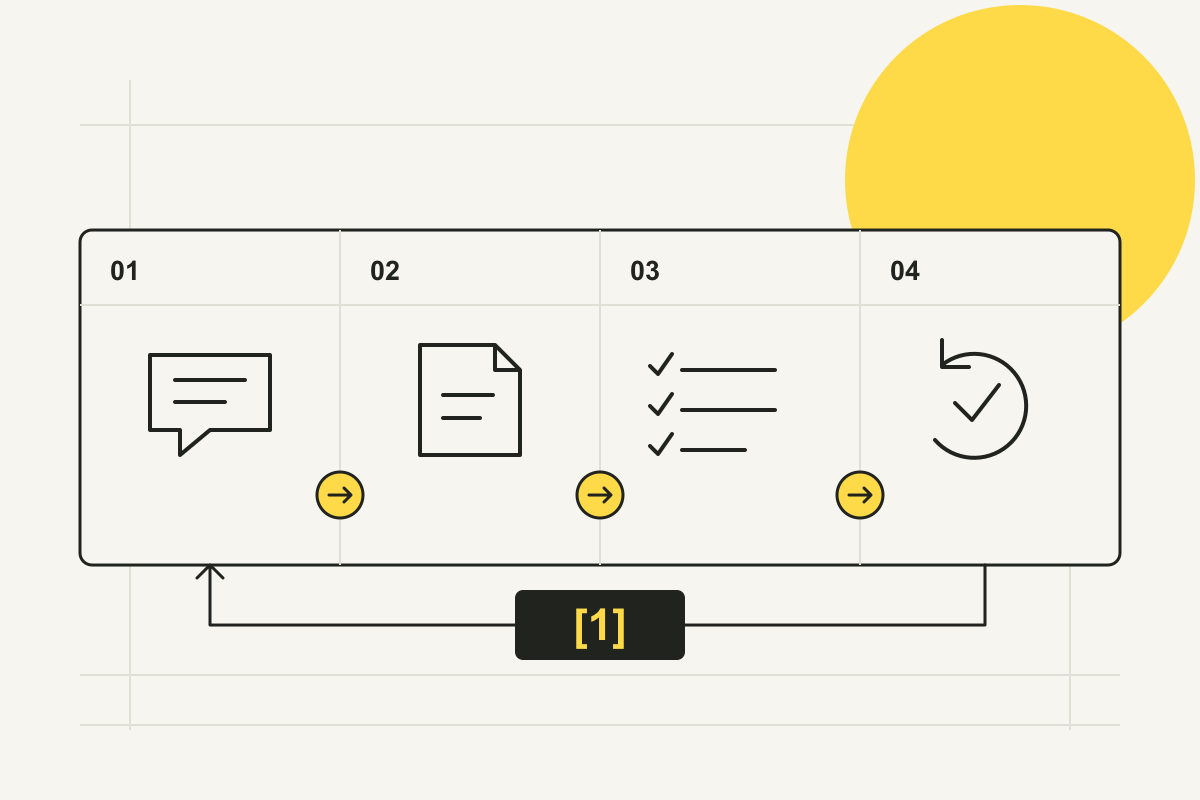
- 01Buyer decision
- 02Question + provenance
- 03Fixed test conditions
- 04Saved answer
Give every question a complete record
Copy one record per question. The origin of a question and the origin of an AI answer are different fields: sales notes can justify a question, while a saved answer documents an observation. Do not put personal contact details or confidential briefs into either record.
| Field | Open template |
|---|---|
| Identity and version | [Question ID]; [set version]; [exact wording]; [date added]; [owner]. |
| Intent and brand status | [Problem / category / comparison / local / budget / selection]; [branded / unbranded]; [buyer decision]. |
| Question provenance | [Anonymized customer question / Search Console query / public discussion / editorial hypothesis]; [permitted reference]; [date]; [what it establishes]. |
| Market and language | [Country / service area / city if relevant]; [answer language]; [location stated in prompt]; [actual available location settings]. |
| Platform and mode | [Product]; [visible model if available, otherwise unknown]; [web search setting]; [UI or API]; [account/context conditions]. |
| Date and repetitions | [Observation date, time and timezone]; [planned repeats per question and platform]; [repeat IDs]; [review schedule]. |
| Counting and exceptions | [What counts as a mention / linked citation]; [no-answer and error rules]; [separate branded group]; [denominator]. |
| Evidence and change control | [Full answer archive]; [cited URLs]; [log location]; [reason for any change]; [replacement set version]. |
Find questions in real decisions, then label the gaps
Start with permissioned, anonymized sales conversations, support questions and briefs. Record the decision, not a flattering paraphrase. If someone asks whether an old site can be improved, preserve that choice instead of rewriting it as “which agency is best?”.
Search Console queries, when available, can show how people found a site in Google Search. They do not establish the exact questions those people asked an assistant. Public discussions can reveal vocabulary and concerns, but one post does not establish frequency. Keep the source and its limitation beside the question.
Without access to those inputs, begin with a clearly marked editorial hypothesis and ask the business to validate its relevance. Missing Search Console access is a data gap, not evidence of no demand. Remove duplicate paraphrases that add no decision or constraint; retain distinct needs even when they share a keyword.
Bing describes grounding queries in AI Performance as retrieval phrases and a sample of citation activity. Treat them as clues about content retrieval, not a complete transcript of customer questions or demand across all assistants.
Bing: Introducing AI Performance in Bing Webmaster Tools
Separate discovery, brand accuracy and diagnostic prompts
An unbranded question asks about a need without supplying your name. A branded question supplies that name and can test the resulting description. Keep their results separate: adding a name changes the task and cannot demonstrate spontaneous discovery.
Do not instruct the assistant to recommend your company, read only your URL or include your brand in a list, then report the output as general visibility. Those can be useful diagnostic tasks if labeled separately. Save the exact instruction, including any request for links, because it changes what you are testing.
A negative result is not a reason to delete a relevant question. Select the set before inspecting performance. Keep problem, comparison and budget questions even when they return explanations rather than supplier lists; the answer type is itself part of the observation.
Match the buyer decision across languages and markets
A language is not a location. An English question may concern Poland; a Ukrainian question may concern a business operating in Warsaw. Record both. For a local task, name the place explicitly rather than relying on an unexplained “near me”. A place in the text still does not prove that a product used that location setting.
Review each language for natural wording and the same underlying decision. Translate the constraint, not just the words. If a different service, city or budget condition is needed in one market, give that question its own version and explain the difference instead of presenting it as an identical comparison.
OpenAI documents approximate location controls for its API web search tool. This establishes a configurable API condition; it does not prove that an API test reproduces a ChatGPT user-interface session. Keep UI and API observations in separate groups and record the controls actually available.
OpenAI: Web search API guide
Save one observation per answer, including failures
Choose a manageable repetition plan before running the set and use the same plan in each comparable period. Start a fresh conversation for each independent observation; if you test a follow-up journey, store the entire conversation and analyze it separately. Record context and personalization settings you can inspect; mark the rest unknown.
There is no universal number of prompts or repetitions that makes a convenience sample representative. Repeats describe variation under your recorded conditions. A fixed set does not become a survey of all buyers. Keep errors and refusals visible; decide in advance whether they enter a rate and show both planned and completed counts.
| Observation field | Fill after the check |
|---|---|
| Join key | [Set version / question ID / platform group / repeat ID]. |
| Conditions | [Exact prompt and context]; [date / time / timezone]; [mode / language / market / available settings]. |
| Outcome | [Answer / no answer / error]; [full response archive reference]; [error reason if known]. |
| Brand and sources | [Brand named: yes / no / ambiguous]; [description accuracy]; [all cited URLs and their roles]; [brand URL linked: yes / no]. |
| Interpretation | [Observed fact]; [possible explanation, explicitly unproven]; [next action]; [reviewer]. |
| Completion | [Planned / completed / failed repeats]; [any exclusion and pre-agreed rule]; [comparison limits]. |
Freeze the core set and compare like with like
Maintain a stable core and a separate exploratory list. If you change wording, add a language, switch modes or replace a product, preserve the old records and create a new version. Show the common questions separately from the expanded set; do not splice the two totals into one growth line.
For a workload estimate, multiply questions by platform groups and planned repeats within one observation window. In a hypothetical plan, six unbranded questions × two platform groups × three repeats = 36 planned observations. Run the branded check separately. These numbers illustrate scheduling only; they are neither a required sample nor collected results.
Google notes that AI Mode and AI Overviews can use different models and techniques, and that Overviews often do not trigger. Keep these surfaces separate. “No Overview displayed” is an observation about that surface, not a missing brand mention in an answer that never appeared.
Google: AI features and your website
Keep a holdout question before changing your content
When a page is revised around a known question, test an additional relevant question that was not used to write it. This can reveal wording-specific improvement in your small sample. Keep the fixed comparison set intact and report the extra question separately; this is an editorial diagnostic, not a statistical validation method.
Use Google’s current Generative AI performance report in Search Console for its documented Search and Discover coverage, Bing AI Performance for its stated Microsoft and partner coverage, and analytics for recognized visits. These are different datasets; none measures every AI answer or proves accepted inquiry delivery.
To turn the saved answers into defined metrics, use the AI visibility measurement method.
Google: Optimizing for generative AI features · Bing: Introducing AI Performance in Bing Webmaster Tools
Practical questions and answers
Can I copy a competitor’s prompt list?
Use it for ideas, then verify relevance to your services and buyers. A competitor’s sample does not establish your demand or coverage.
Should I add our brand to every question?
No. That changes the task from discovering providers to checking a named brand. Label the two groups and report them separately.
When should a prompt get a new version?
When wording, market, language, selection or scoring rules change materially. Keep the old set or an unchanged subset for historical comparisons.
Use the set to choose a content task
Before starting, check that every row has a buyer decision, provenance status, market, language and exact wording. Then check the platform groups, repeat plan, exception rules and archive. Have a second pass look for leading questions, duplicated needs and language drift; disclose AI assistance if that is how review was done.
After collecting observations, separate brand mentions, linked citations, recognized visits and accepted inquiries. Use the measurement guide below for counts and interpretation. An answer can suggest an unclear service description or missing evidence worth investigating; it does not reveal the hidden reason a model selected a source.
A 30/60/90-day review schedule can organize follow-up decisions, without promising citations or sales by those dates. Read the GEO introduction for the wider work and the audit template for report acceptance. To discuss a BeeCited GEO scope, use the shared inquiry form with your service, market, languages and existing question set. The template remains open whether or not you contact us.
For implementation, review our GEO service and agree the specific task, inputs and acceptance evidence before commissioning work.
Sources & further reading
Sources checked on 30 October 2026. The question bank and protocol are BeeCited editorial templates, not a platform standard or a client study. No live assistant tests, search volumes or customer results are claimed. BeeCited offers GEO services. Editorial, factual and language reviews used AI assistance; independent expert or native-speaker review is not claimed. Substantively revised on 3 November 2026 with public search research and AI-assisted editorial, factual and language checks. BeeCited sells related services; independent expert or native-speaker review is not claimed. Source titles and their individual check dates are retained below; research URLs remain in project documentation.
- Bing: Introducing AI Performance in Bing Webmaster Tools —
- Google: Optimizing for generative AI features —
- OpenAI: Web search API guide —
- Google: AI features and your website —