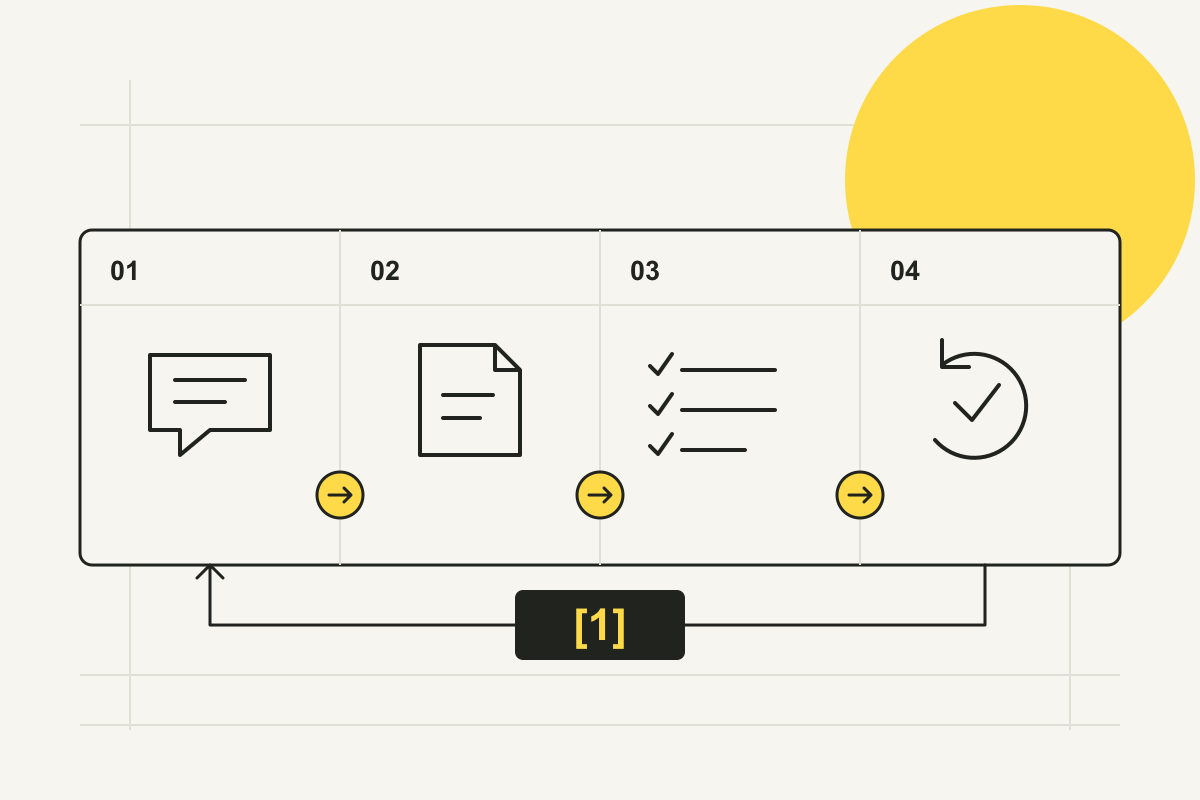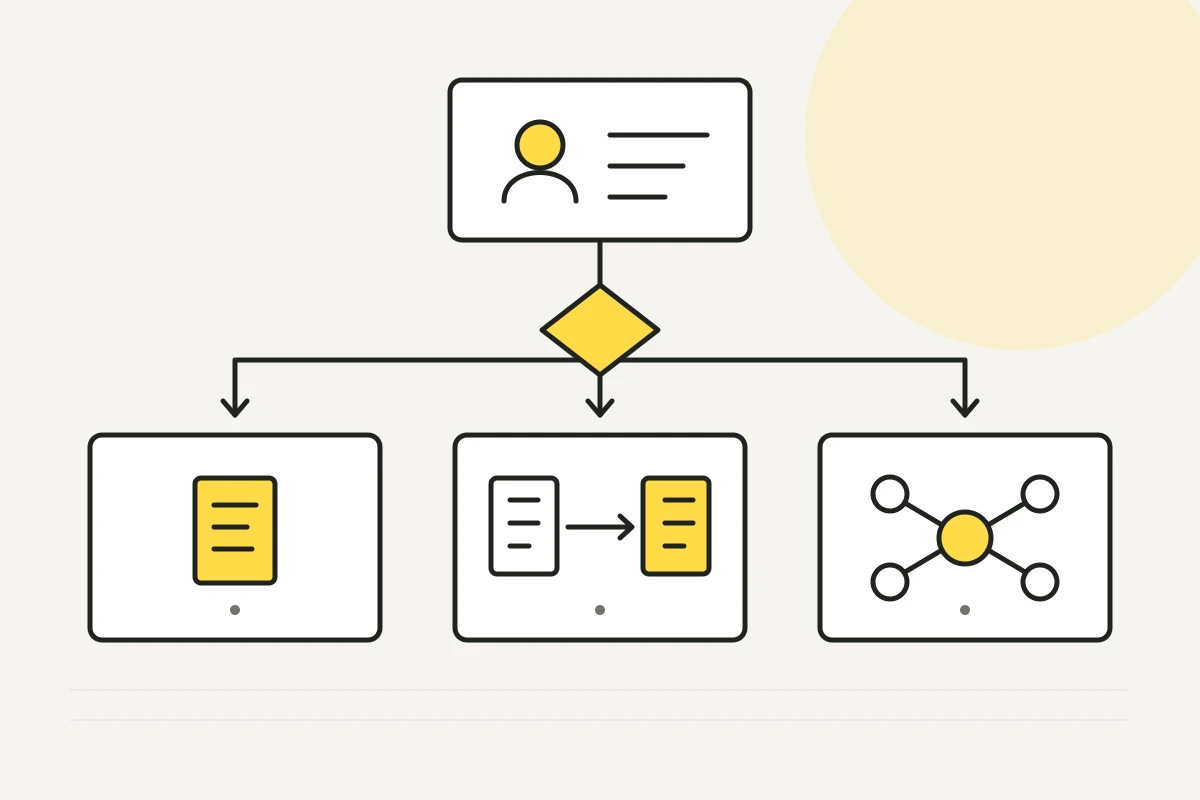
Start with this decision tree
Choose one service, market and language for the first cycle. Follow the rows in order and stop at the first unmet condition. “Available” means that a person has accepted the task and reserved time for it, rather than appearing on an organization chart.
| Decision gate | If no | If yes |
|---|---|---|
| Can a business owner approve facts, priorities and completed work? | Assign an approver and gather the missing facts before buying a programme. | Check implementation access. |
| Can a named person safely edit, publish and verify the required site changes? | Arrange a developer or bounded optimization task; clarify who can release changes. | Check editorial and measurement capacity. |
| Can the team edit for the audience and repeat the agreed observations? | If one capability is missing, buy that specific service and retain internal coordination. If several are missing, use the final row. | Start internally with a narrow scope and a review date. |
| Do several unresolved workstreams need ongoing coordination? | Use internal work plus focused specialist support as needed. | Compare an agency scope with named implementers, handover artifacts and a business approver. |
- 01Name an approver
- 02Check access
- 03Identify skill gaps
- 04Choose delivery
Copy the task ownership matrix
These are roles, not a required headcount. One capable person can hold several roles; an editor or developer may be internal or contracted. Replace each role with a name. For every deliverable, identify one person doing the work and one business approver. An agency coordinates only the responsibilities included in its agreement.
| Task | Business owner | Editor | Developer | Agency, if engaged |
|---|---|---|---|---|
| Buyer questions and scope | Select real sales questions, service and market. | Group questions by the decision they support. | Flag site constraints. | Challenge the sample and coordinate the brief. |
| Service content and languages | Approve facts, examples and permissions. | Write, source and review each language. | Publish readable HTML and check links. | Assign editors and acceptance checks. |
| Website access and repairs | Authorize scope and retain account control. | Confirm that essential text survived. | Diagnose, implement, test and document rollback. | Coordinate technical work if included. |
| Measurement | Define useful inquiries and approve the sample. | Save full answers, conditions and cited URLs. | Verify agreed tracking without exposing personal data. | Compare records and explain coverage limits. |
| External sources | Confirm public facts and approve disclosure. | Prepare a useful, substantiated contribution. | Correct links or site facts as required. | Research relevant publishers and report submission status. |
| Acceptance and handover | Accept work against evidence; decide what follows. | Deliver editable copy and source notes. | Deliver change log, checks and access instructions. | Return files, exports, open issues and the next decision. |
Keep customer knowledge and factual approval inside the business
Collect repeated questions from real conversations without copying personal data into the brief. Record what the customer needed to decide, which service answered that need and what information was missing. Search Console queries can add evidence when you have access; without access, label the question set as an editorial sample rather than measured search demand.
An editor can turn those notes into a clear page, but someone who delivers the service must confirm its scope and limitations. Supply permissioned examples or explain a method when no publishable case exists. AI drafting does not replace checking the facts or reviewing each language.
Google says small local businesses can probably do much SEO work themselves. That advice supports learning the fundamentals; it does not establish that an untrained owner should repair every site or that DIY GEO outperforms an agency. Google’s content guidance asks whether readers can accomplish their goal. Use that question when accepting copy.
Google: Choosing an SEO provider · Google: Creating helpful, reliable content
Buy a missing capability as a bounded task
If the team can approve copy and run observations but cannot change the site safely, a developer or website optimization service may be enough. Ask for affected URLs, the proposed change, the verification method and a handover. A diagnosis without an implementer leaves the original dependency unresolved.
If content and implementation are covered but tracking is unclear, scope analytics help around the events and reports you need. Distinguish a CTA click, a recognized visit and an inquiry accepted by the delivery channel. If language review is the gap, commission review in that language rather than publishing an English fallback.
For Google AI Overviews and AI Mode, Google says ordinary SEO foundations apply and no special AI file or schema is required. A supporting link must be indexed and eligible for a snippet; eligibility does not guarantee display. These are Google Search conditions, not a complete specification for other assistants. Ask a specialist to explain a diagnosed need before buying an “AI optimization” package.
Google: AI features and your website
Use an agency when coordination is part of the job
An agency arrangement is worth comparing when technical changes, multilingual editing, source research and reporting repeatedly depend on one another. Ask who actually performs each task, whether implementation is included, what materials the business must supply and who resolves a blocked approval. A broad service label does not answer those questions.
The business still supplies truthful service knowledge and approves public claims. Keep business-owned accounts, editable materials and exportable records. Give access appropriate to the agreed work and define how it is removed at handover. An agency cannot promise acceptance by an independent publisher or control an assistant’s recommendations.
Google recommends requesting explanations and realistic estimates when hiring SEO support, and warns about guaranteed rankings. Apply the same scrutiny to a GEO proposal. Compare accepted deliverables and the method of observation; do not choose from an isolated favorable screenshot. The agency selection guide below provides a fuller provider checklist.
Google: Choosing an SEO provider
Measure your own capacity before committing to a recurring scope
No universal number of hours separates DIY from agency work. The page condition, approval delays, languages and access requirements change the workload. Use a small first cycle to record task, person, active time, waiting time, rework and the accepted artifact. Keep these fields separate so an access delay is not mistaken for editing effort.
For planning, add the recorded work, coordination and review time, then compare that with time the named people can actually reserve. Record supplier fees and tool costs separately from internal time. Do not convert an assumed hourly rate into a measured saving. If no log exists, mark any estimate as a scenario assumption and revise it after the cycle.
A hypothetical example: a service business has an owner who approves facts and an editor who can maintain one language, but nobody can release site changes. It commissions one implementation task and keeps the brief and observations internally. If repeated coordination later exceeds its available capacity, it can compare agency support. This is a decision example, not a BeeCited client result.
Use this handover template for internal or external work
Copy the fields into your shared task record and fill in the brackets. Unknown dependencies should remain visible. The same acceptance rule applies whether the implementer is a colleague, a specialist or an agency.
| Field | Complete together |
|---|---|
| Scope | [Service / market / language / URL]; [buyer question]; [included deliverable]; [exclusions]. |
| People | [Business approver]; [implementer]; [editor]; [observation owner]; [coordination owner]. |
| Inputs and access | [Verified facts and permissions]; [access needed]; [who supplies it]; [action if missing]. |
| Acceptance evidence | [Approved text / change log / before-and-after checks]; [reviewer]; [contact-route verification in an authorized environment]. |
| Observation record | [Exact question set]; [platform / mode / language / date / repetitions]; [full answers and source URLs]; [limits]. |
| Control and next decision | [Editable files and exports]; [account owner]; [cost approval]; [review date]; [continue / change / pause condition]. |
Try the operating model on one real task
Pick a service page that needs clarification. Identify who supplies facts, edits each language, publishes the change and verifies it. If your team can complete that loop sustainably, keep it internal. If one skill is missing, commission that step; use a broader agency scope when the coordination itself repeatedly fails.
If coordination needs an external owner, use the agency selection questions.
Practical questions and answers
Can a visibility tool replace an agency?
It can collect observations or help prioritize, depending on its documented functions. It does not automatically supply factual approval, implementation access or accountable coordination.
Is a hybrid model practical?
Yes, when ownership is explicit. Keep business facts and approvals internal, assign specialist tasks, and name who integrates and verifies the results.
How do I estimate internal capacity?
Log one complete task from research through publication and review. Use your actual time and dependencies instead of an invented weekly-hours benchmark.
Review the arrangement against completed work
At the agreed review date, check whether facts were approved, changes were implemented and observations can be repeated. Show outstanding dependencies and who owns them. Report mentions, linked citations, recognized visits and accepted inquiries separately. An increase in one does not establish an increase in the others or prove that the delivery model caused it.
Checks at 30, 60 and 90 days can structure decisions; they are not deadlines for visibility or sales. Continue the arrangement when people can complete the agreed work. Add focused support when one recurring gap is clear. Reconsider coordination when several workstreams remain blocked; pause expansion when approvals or evidence are unavailable.
For the foundations, read the GEO introduction; for page readiness and repeatable observations, use the checklist and measurement guide below. If you want a scoped proposal from BeeCited, send the URL, service, language, available internal roles and unresolved task through the shared inquiry form. We can discuss optimization, analytics or coordinated GEO according to that gap.
For implementation, review our GEO service and agree the specific task, inputs and acceptance evidence before commissioning work.
Sources & further reading
Sources checked on 28 October 2026. The decision tree, responsibility matrix and handover template are BeeCited’s editorial tools, not a platform rule or a client study. BeeCited sells GEO services. No measured workload, keyword volume or performance advantage is claimed. Editorial, factual and language reviews used AI assistance; independent expert or native-speaker review is not claimed. Substantively revised on 3 November 2026 with public search research and AI-assisted editorial, factual and language checks. BeeCited sells related services; independent expert or native-speaker review is not claimed. Source titles and their individual check dates are retained below; research URLs remain in project documentation.
- Google: Choosing an SEO provider —
- Google: AI features and your website —
- Google: Creating helpful, reliable content —